Ethiopian vs Australian Opal Beads: What’s the Difference?
Opals flash with color in ways few other gemstone beads can match. But not all opals are the same. When you compare Ethiopian vs Australian opal, you'll find differences in how they form, how they look, and how you need to care for them. This guide breaks down the traits that matter—color play, durability, and maintenance—so you can choose the right opal beads for your next jewelry project.
Understanding Opal Beads
Opal beads bring something special to jewelry making. Their play-of-color—the way they flash rainbow hues as light hits them—sets them apart from most other gemstones.
This phenomenon happens because opals are naturally occurring photonic crystals made of silica spheres arranged in regular patterns. When light enters the stone, it diffracts off these microscopic structures, creating flashes of color that shift as you move the bead.
Jewelry makers value opal beads for their ability to add visual interest to any design. A simple strand of opal rondelles can transform a basic necklace into something memorable. The beads come in various shapes—from smooth rondelles to tumbled nuggets—and each format shows off the stone's color play differently.
Ethiopian vs Australian Opal: Key Origins
The story of where an opal forms shapes what it becomes.
Ethiopian opals are the newer discovery. Farmers near Wegel Tena in northern Ethiopia found play-of-color opal in early 2008. These stones form through volcanic activity, which creates a porous structure. The volcanic environment gives Ethiopian opals their characteristic translucency and intense color flashes.
Australian opals have a longer mining history. They develop over millions of years in sedimentary layers, forming in ironstone or sandstone host rock deep underground. This slow formation process in stable sedimentary conditions creates opals with different properties than their Ethiopian counterparts.
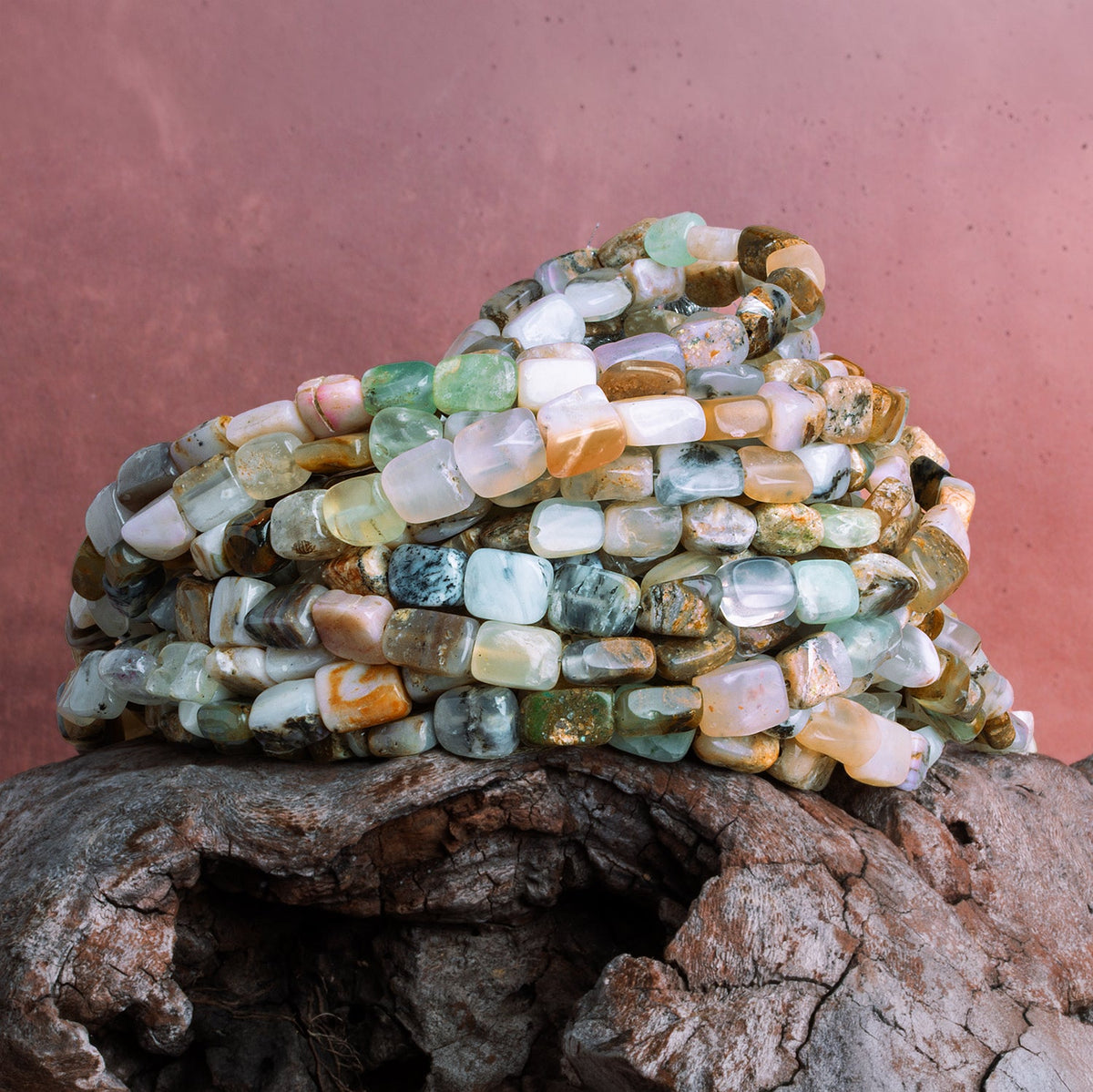
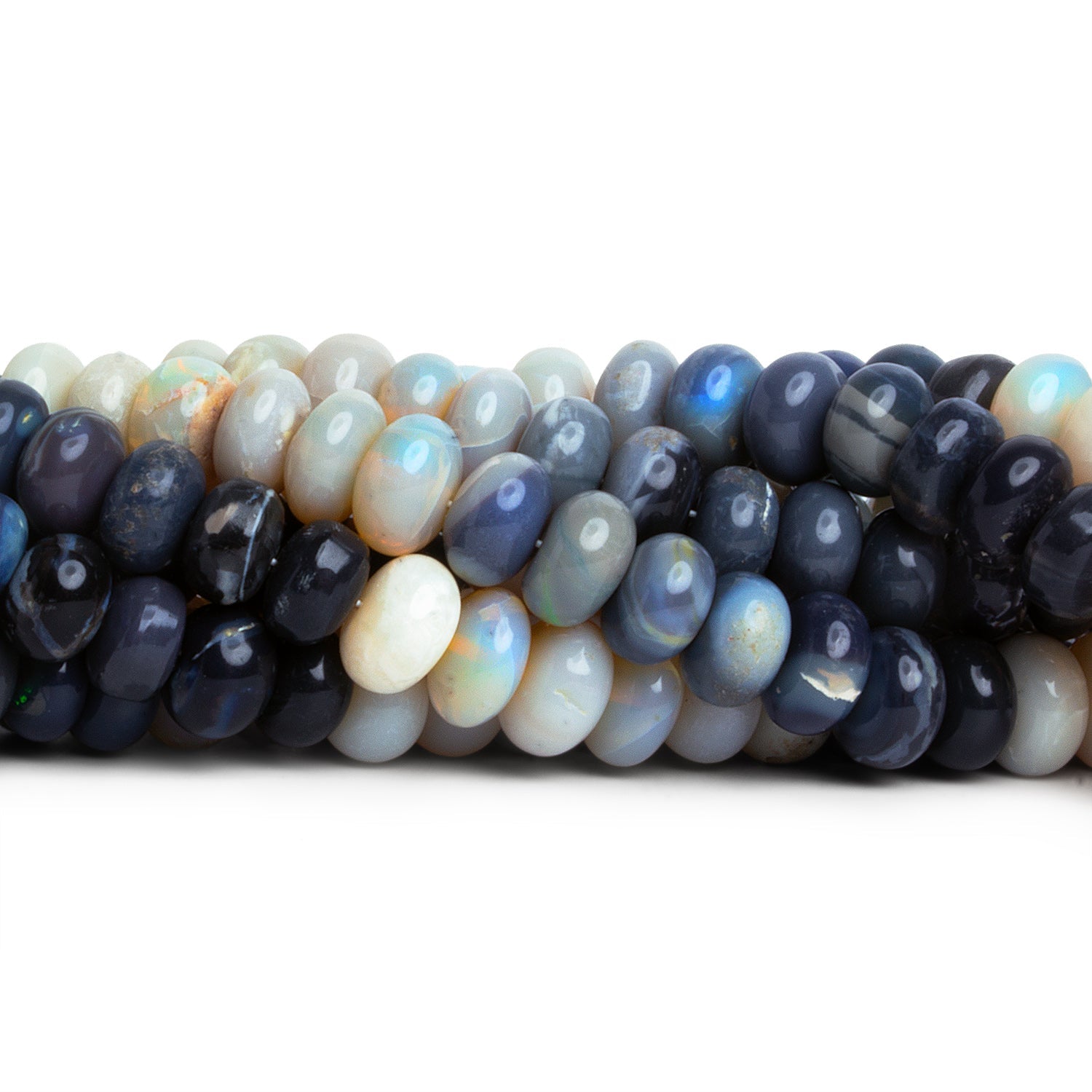
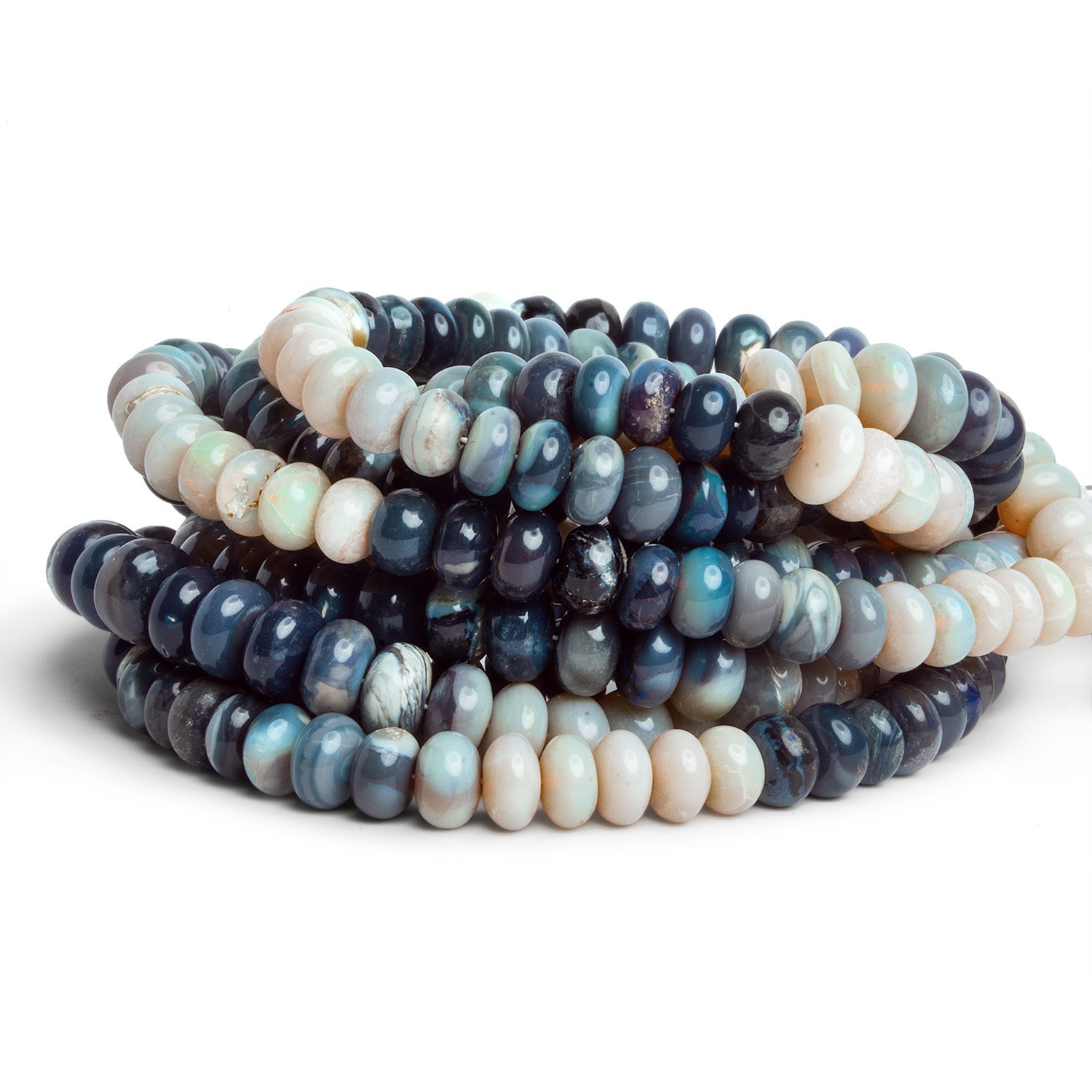
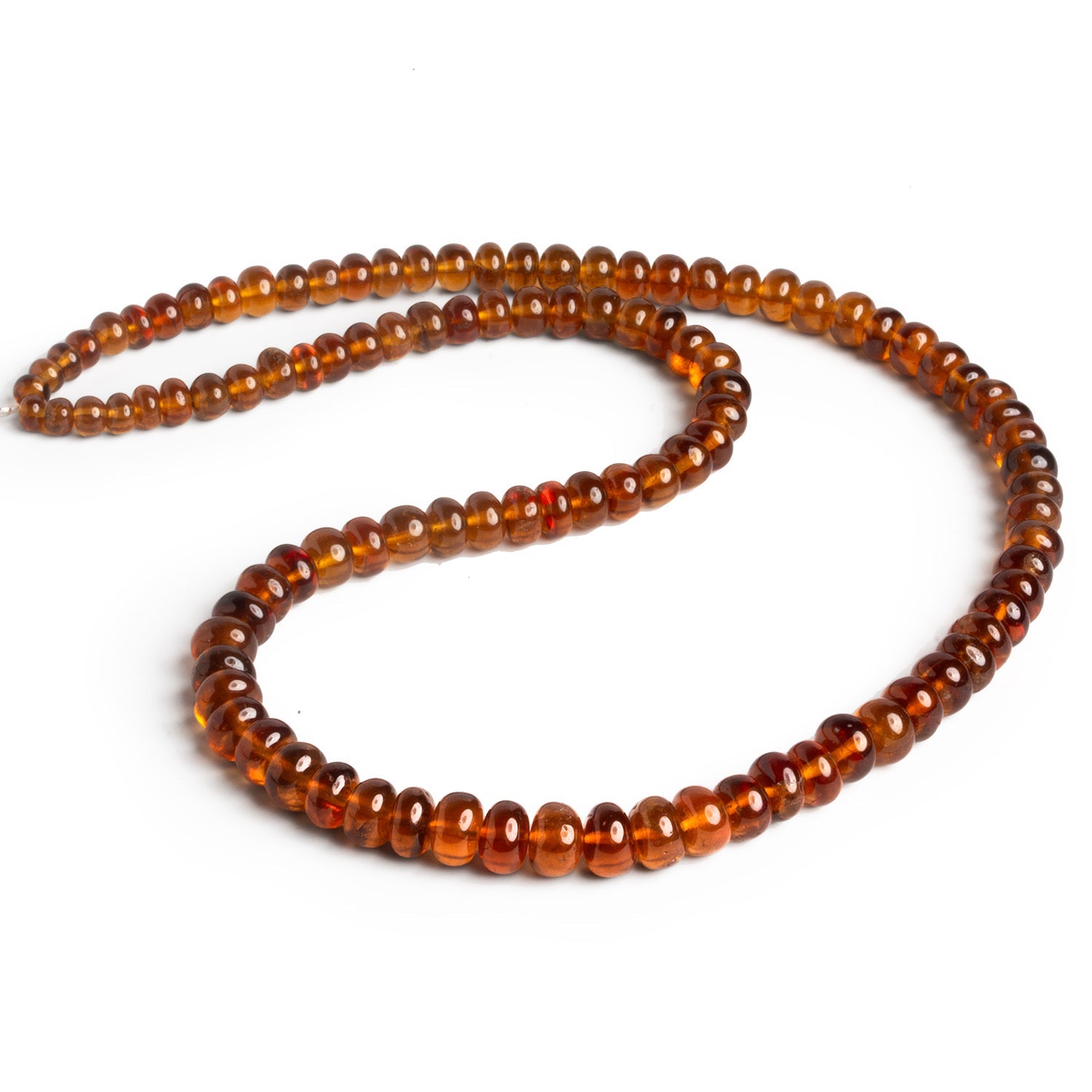
The geological differences show up in the finished beads. Our golden Ethiopian opal plain rondelles have translucent bodies with no visible matrix, while our Australian boulder opal tumbled nuggets show a moderate bluish-grey matrix throughout the stone.
The Science of Color Play
The magic of opal color comes down to sphere size and arrangement.
The colors you see depend on the size of the silica spheres inside the opal. Smaller spheres produce blues and greens. Larger spheres create reds and oranges. The spacing between spheres—typically 150 to 300 nanometers—determines which wavelengths of light get diffracted.
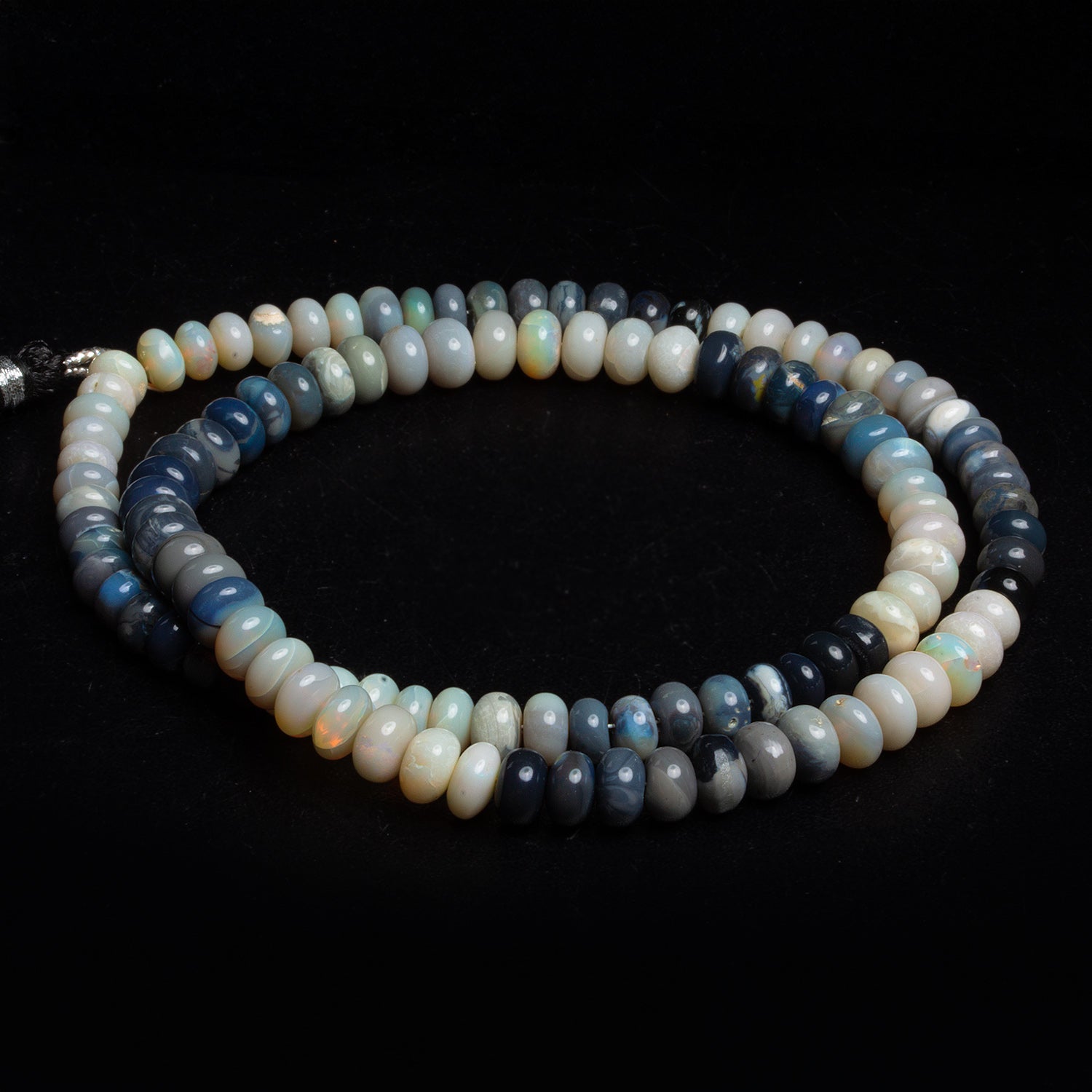
Ethiopian opals tend to show a broader color spectrum. Our golden Ethiopian opal beads display excellent play of color in red, blue, green, orange, and periwinkle hues. This wide range suggests the presence of varied sphere sizes within each stone.
Australian opals often emphasize different parts of the spectrum. Our Australian boulder opal beads show little play of color in blue-violet-yellow hues. The color display is more subtle but set against the stone's natural matrix, which can make the flashes stand out in a different way.
Body color matters too. Ethiopian opals often have creamy off-white or golden bodies that let light pass through. Australian opals, particularly boulder varieties, feature light grey to cream body colors with visible matrix that creates a different visual effect.
Durability and Handling
The biggest practical difference between Ethiopian vs Australian opal comes down to water.
Ethiopian opals are hydrophane, meaning they absorb water like a sponge. When you expose them to water, their appearance changes—colors shift, transparency alters, and the stone can even change size temporarily. This happens because of their porous volcanic formation.
Australian opals contain water naturally, but don't absorb it from outside sources. They're non-hydrophane, which makes them more stable in different environments. You can wear Australian opal jewelry without worrying about exposure to moisture affecting the stone's appearance.
The hydrophane nature of Ethiopian opals means you need to think about more than just water. Body oils, lotions, and perfumes can penetrate the porous surface, potentially causing permanent color changes. This doesn't mean Ethiopian opals are fragile—it just means they need different handling.
Both types rank similarly on the Mohs hardness scale, making them softer than many gemstones. Handle all opal beads with care to avoid scratches and chips. Store them separately from harder stones that could damage their surface.
Visual Differences in Jewelry
The way opal beads look in finished jewelry depends on their transparency and color distribution.
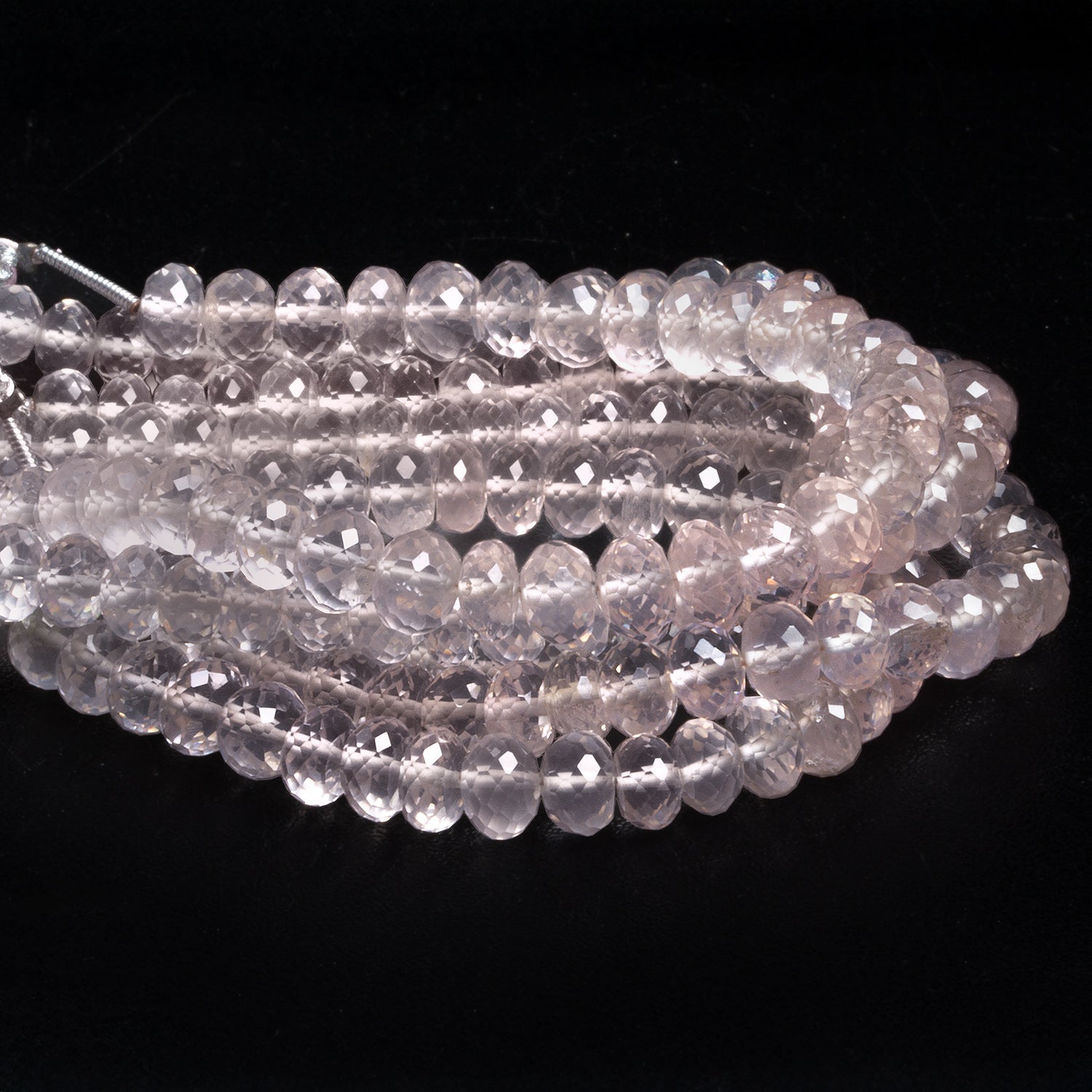
Ethiopian opal beads work well in designs where light can pass through them. Their translucent to semi-translucent bodies create a glowing effect when backlit. Our light golden Ethiopian opal faceted rondelles show strong multi-color flashes throughout their waxy-luster bodies, making them eye-catching in pendants or earrings where light hits them from multiple angles.
The color range in Ethiopian opals gives you options. We carry Ethiopian opal beads in olive green, black, and even Barbie pink tones. Each color base creates different effects when the play-of-color activates.
Australian opal beads have a different presence. The visible matrix in our boulder opal nuggets adds texture and depth. These beads are larger and more substantial, with a waxy luster and rounded edges that give them an organic feel. The light grey to cream body colors with bluish-grey matrix create an earthy aesthetic.
For pairing with other materials, consider the overall tone. Ethiopian opals with their clean, translucent bodies complement delicate freshwater pearls and fine chain. Australian boulder opals with their matrix and larger size pair well with heavier metal findings and can anchor a design.
Ethiopian vs Australian Opal: Maintenance and Care
Caring for opal beads requires a gentle approach, but the specifics vary by type.
For Ethiopian opals, avoid water contact. When Ethiopian opals get wet, they temporarily turn translucent yellow or brown and seem to lose their color play. They'll return to normal after air-drying for about 24 hours, but repeated exposure can cause issues.
Keep Ethiopian opal jewelry away from lotions, perfumes, and oils. Apply these products before putting on your opal pieces. Remove opal jewelry before washing hands, showering, or swimming.
Australian opals need less worry about moisture but still benefit from gentle care. Clean them with a soft, slightly damp cloth. Avoid ultrasonic cleaners and harsh chemicals that can damage the surface or dry out the stone's natural water content.
Store both types of opal beads in a soft pouch or lined box. Keep them away from heat sources and direct sunlight, which can cause drying or color fading over time. If you live in a very dry climate, some jewelers recommend storing opals with a damp cotton ball in a sealed container to maintain humidity—though this matters more for Australian opals than Ethiopian ones.
When working with opal beads in your designs, use silk or soft synthetic thread for stringing. The softer material reduces abrasion on the bead holes. Space opals with small knots or soft spacer beads to prevent them from rubbing against each other.
Making Your Choice
Choosing between Ethiopian vs Australian opal beads depends on your design goals and how you plan to wear the finished piece.
Pick Ethiopian opals when you want intense color play and translucent stones that glow with light. They're ideal for special occasion jewelry that won't face daily exposure to water or oils. Our dark golden Ethiopian opal rondelles offer excellent play of color with no visible matrix, perfect for designs where you want the focus on pure color flash.
Choose Australian opals for everyday wear pieces that need to handle real-world conditions. The non-hydrophane nature makes them more forgiving. Our Australian opal plain rondelles and matte nuggets bring opal's beauty to designs you can wear without constant vigilance.
Consider your budget too. Ethiopian opals typically cost less due to plentiful supply, while Australian opals command higher prices for their stability and established reputation.
At The Bead Traders, we carry both types in multiple formats—from small rondelles to larger nuggets. Browse our gemstone beads collection to see the full range. Check our new arrivals for the latest opal strands.
Orders over $100 ship free in the United States, making it easy to stock up on the opal beads you need for your next project. Both Ethiopian and Australian opals have their place in jewelry making. Understanding their differences helps you choose the right stone for each design.